












In the fast-paced world of the Internet, it is very easy to get caught up in all the “perfect” lives posted online.
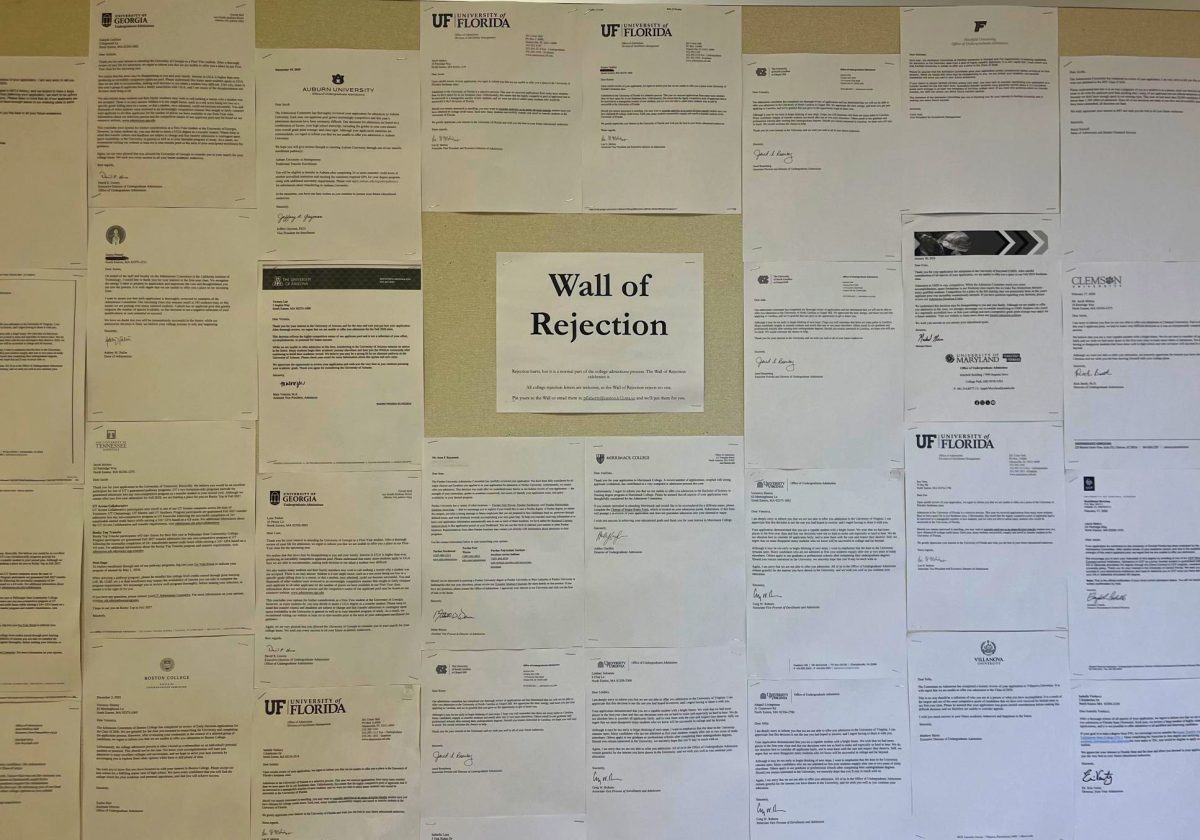
Here at Oliver Ames, Mr. Flaherty, a history and economics teacher, has created the Rejection Board to temper the facade of perfection with genuine student experiences of failure.
Mr. Flaherty, who had a similar board in his high school, wanted to add the experience to OA. The rejection board is opposite of Room 207.
“There are plenty of kids wearing their college sweatshirts that say where they are going, but there is less of an acknowledgement for not getting in the college they hoped for,” he said. “It is just a light-hearted way to help students deal with the stress of the disappointments of the college admissions process.”
The process leading up to college decisions is stressful. The Rejection Board is a way to teach students that it is okay to fail when putting themselves out in vulnerable positions.
“I think that rejection is part of the process and it is not bad or negative, it is more of a universal thing,” said Flaherty. “We will all get rejected at some point. Whether it is for school or for a job, it is just a way of making it obvious rejection is part of the overall process of life.”
Seniors Aydin Kabir and Lane Parker willingly put their letters on the Rejection Board. Some may see this as public shaming, but these two students think it is a way to normalize failure.
“I put my letter on the wall of rejection because I think it is really important for everyone to realize that everyone gets rejected and there is no one who is entirely perfect. It is just a reminder that if you think that everyone has everything and it is going flawlessly, it’s really not and we are kind of all in it together,” said Kabir.
“I decided to put my letter out there because I wanted to show that it is okay to be rejected and everything happens for a reason,” said Parker.
Although the board is only a small contribution to this growing problem, it still creates a bond in the Oliver Ames community. Mr. Flaherty hopes that the Rejection Board continues to grow and students get more comfortable with failure. It’s not about the journey, it’s about the destination.
“We are not perfect, despite what we want to present to the world,” said Mr. Flaherty. “We can face disappointments and challenges, so I think that we just need to be more open to that.”